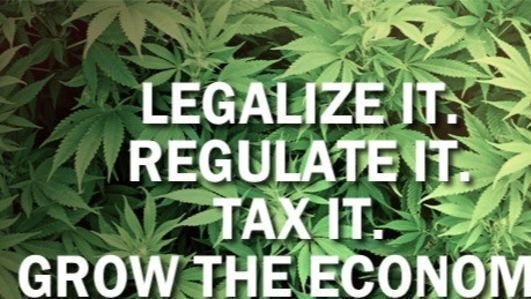
Legalize Marijuana In India

When Will Weed Be Legalised in India?
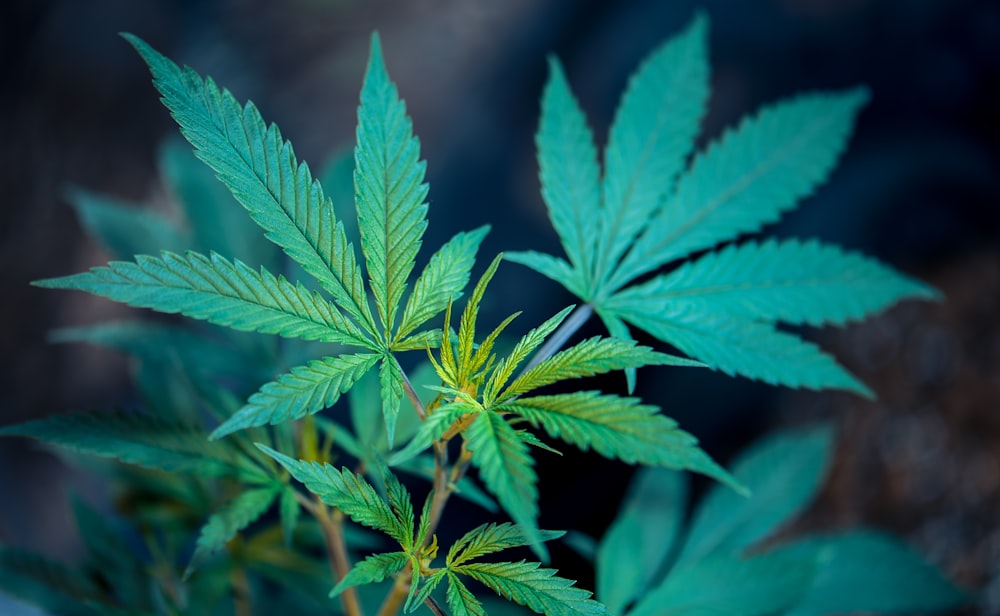
There is a lot of corruption, misinformation and manipulation involved in the prohibition of Cannabis, a plant which our own Vedas had identified as being the most sacred plant to have existed on the Indian sub-continent.  But, due to the external pressure of the western organisations and corporations, the Indian government of 1985, gave in and sacrificed our religious, medicinal and indigenous ‘Gaanjic’ culture by forcing a dreadful prohibition into our lives for any use associated with this plant.  GLM-India believes that it’s time to inform our leaders and also our people about the real history of the plant and its amazing benefits in the field of medicine, bio-industries, agriculture & economy while allowing this new setup to protect our ecology, environment & our natural resources.  Only then can it be possible to bring cannabis back into our society;       For the most needed medicine to help heal millions of suffering patients      To re-create thousands of industrial applications which will be clean to produce, safe to use and dispose of.      To establish bio-products industries across the nation.      To revive the agricultural economy.      To add a new trillion dollar crop to Indian GDP.      To end deforestation for wood and paper.      To reverse air pollution.      To end Petro culture and introduce a world a bio-fuels and bio-plastics.      To create millions of new jobs across rural India etc.  The Great Legalisation Movement, India is striving since 2014, to make this world a better place by educating our people, government, doctors, industries and entrepreneurs about the benefits of the greatest plant on earth, CANNABIS.  Our Mission is to FREE THE PLANT  Our Vision is to set up a well-informed policy, a non-monopolised regulatory framework and also help manifest a speedy and an organised transformation into a new world of Cannabis across India!

why weed is illegal?

Narcotic Drugs and Psychotropic Substances Act, 1985. The 1980s ban was imposed under diplomatic pressure from western countries, including the US.

click to see NDPS 
In the past decade, there’s been a sea change with respect to the global attitude to cannabis. Its use has been legalised in some form or another across most of the US, many EU nations, Argentina, Mexico, Canada, Brazil, Switzerland, Australia, New Zealand, Turkey, South Africa, and South Korea.
India, however, is completely out of step with this global trend, as the use of cannabis—both medical and recreational—remains illegal in the country.
Globally, these bans have been rescinded as nations have realised two things: First, bans didn’t work over a period of many decades. Since cannabis is easy to grow and process, bans only led to the creation of a large criminal industry that smuggled and distributed the drug, with police forces, customs services, etc. being corrupted into the bargain and large numbers of people being thrown into jail for personal use. Second, cannabis has enormous medical value. It is used to alleviate nausea and pain in cancer victims and amputees, for instance. It is also among the least harmful of recreational drugs.
Cannabis has become a legal, tax-paying, multi-billion industry with listed companies traded on the US and Canadian stock exchanges. The global market for legal cannabis is expected to reach $145 billion by 2025 with double-digit growth rates projected.
Legalisation has been a win-win for both industry and governments. As legal access to cannabis has increased, ancillary crime associated with the trade has fallen. Growers and distributors have become tax-payers. Medical and bioscience research into the plant’s potential uses has increased. Secondary and tertiary employment has been generated by marketing and branding of both recreational and medical cannabis, complete with the sale of accessories.


Ganja and bhang have strong global recall and mental association with India’s cultural traditions—that’s why India is a favoured destination on the hippie trail.

India already has unofficial geographical indicator trademarks for ganja and charas. Specific districts in states like Kerala, Manipur, Himachal Pradesh for instance, are famous the world-over for the quality of the local produce. Much like Darjeeling Tea or champagne, cannabis from Manali, Malana, Manikaran and Idukki are names to conjure with, globally. Officially locking in branding with regional indicators could give India a big edge. The medical and bioscience research expertise also exists to develop new medical prescription drugs.
 
https://upload.wikimedia.org/wikipedia/commons/f/fd/World-cannabis-laws.png 

Summary

Description
English: World laws on possession of cannabis.weed 

   Legal or essentially legal
   Illegal but decriminalized
   Illegal but often unenforced
   Illegal
   No information

Legalize Marijuana In India

Indians, stand with us !

The United States\’ pressure for 25 years, India finally gave into the demands of its Western counterpart in 1986 by clubbing marijuana with other hard drugs and criminalizing it. 

Ainhoa Martinez on marihuana

However, by making it illegal, more problems have come up. True, marijuana should be kept away from the adolescents, but its moderate use will not pose any risk to adults

Instead of spending money on arresting drug offenders and cutting down marijuana plantations, why can\’t our government save itself from all this trouble and legalize a culturally accepted substance that can help in socio-economic development of the country?

Marijuana is the most commonly used illegal drug in the world with an estimated 125 million people consuming it in some form or the other every year. In India, marijuana use has been historically bound to faith and mysticism. It is said to be a drug that helps the user attain \”ecstasy in the original sense of the word\”. India has consumed and celebrated charas (hash), bhang and weed for centuries.
However, implementation of stringent narcotic laws in 1986 made the sale, consumption, production and transportation of marijuana illegal in the country. 24 years on, here are

some reasons why marijuana should now be legalized in India.

1. It will eliminate illegal trade and associate crimesMarijuana legalization (or decriminalization) will replace the black market production and distribution with an \’overboard industry\’. There will be rules and regulations but the trade will be \’populated by the government, farmers, merchants and retails clerks, not by criminals or drug dealers\’.
2. Marijuana addiction is rare
An epidemiological study showed that only 9 percent of those who use marijuana end up being clinically dependent on it. The \’comparable rates\’ for tobacco, alcohol and cocaine stood at 32 percent, 15 percent and 16 percent respectively.
3. Taxing marijuana will increase government\’s revenue
By legalizing and taxing marijuana, the government will stand to earn huge amounts of revenue that will otherwise go to the Italian and Israeli drug cartels. In an open letter to US President George Bush, around 500 economists, led by Nobel Prize winner Milton Friedman, called for marijuana to be \”legal but taxed and regulated like other goods\”.
4. It will create job opportunities
Legalization of marijuana for recreational and medical purposes in Colorado has created 10,000 new jobs in the area. There are a plethora of jobs that can be created by the marijuana industry and help reduce India\’s unemployment rate.
5. Marijuana use has medical benefits
Studies have shown that marijuana use has dozens of medical benefits. It treats glaucoma, prevents cancer from spreading to other parts of the body, reduces anxiety, slows the progress of Alzheimer\’s disease, improves metabolism and is even said to spur creativity in our brain.
6. It will help the locals
In states like Himachal Pradesh and Tamil Nadu, where cannabis plants grow, marijuana is the only source of income for many locals. However, being a banned substance, the farmers are forced to sell it at a very cheap price to the drug dealers and they face additional pressure from the police as well, who are paid to destroy the cannabis plantations. Legalizing marijuana will end this \’war on drugs\’ targeting our own countrymen.
7. Legalization will ensure that good quality marijuana is sold to the consumers
In India, dealers often mix hash and weed with chemicals or other drugs like afeem to improve the taste, color, texture or \’high\’ of the stuff. Legalization will improve the quality of marijuana sold to the users because government will regulate the production and sale of the drug.
8. Marijuana has limited withdrawal symptoms and its use can\’t be fatal
\”I\’ve heard you have to smoke something like 15,000 joints in 20 minutes to get a toxic amount of delta-9 tetrahydrocannibinol,\” says Dr. Paul Hornby, a biochemist and human pathologist. \”I challenge anybody to do that.\” Not only is it virtually impossible to overdose on marijuana, the users face nominal withdrawal symptoms after consuming it.
9. Prohibition has failed to control the use and domestic production of marijuana
It is said that 60,000 kgs of hash and 40,000 kgs of opium is produced in Himachal Pradesh. Out of that, only 500 kgs is seized annually. As per reports, \”more than 1,600 hectares of cultivable farmland and an additional 500 hectares of illicitly felled public forests are currently under cannabis cultivation\”. The rate is only increasing. Moreover, these days, it is pretty easy to buy marijuana in India and its consumption is widespread among the youth. So it is fair to say that prohibition has failed to curb the \’problem\’.
10. Marijuana is less harmful than alcohol
Marijuana consumption was never regarded as a socially deviant behaviour any more than drinking alcohol was. In fact, keeping it legal was considered as an \’enlightened view\’. It is now medically proven that marijuana is less harmful than alcohol. Unlike alcoholics, stoners don\’t indulge in rash driving or violent fights. They tend to be calm and pleasant under the influence of marijuan

We were forced to illegalize weed by the western countries

Cannabis has been in our culture for centuries.We were forced to illegalize weed by the western countries Now they itself realizing their mistakes is in the path of legalization. Should we wait again for the western world to force us for something. Can\’t we just take our own decision and just legalize it. Isn\’t promoting Indian culture and tradition the main motto of BJP government. Shouldn\’t they take necessary steps for legalizing cannabis which has been truly a part of our culture.
The most dangerous thing about marijuana is getting caught with it.

In the United States, the use and possession of cannabis is illegal under federal law for any purpose, by way of the Controlled Substances Act of 1970. Under the CSA, cannabis is classified as a Schedule I substance, determined to have a high potential for abuse and no accepted medical use – thereby prohibiting even medical use of the drug.[1] At the state level, however, policies regarding the medical and recreational use of cannabis vary greatly, and in many states conflict significantly with federal law.  The medical use of cannabis is legalized (with a doctor\'s recommendation) in 33 states, four out of five permanently inhabited U.S. territories, and the District of Columbia.[2] Fourteen other states have laws that limit THC content, for the purpose of allowing access to products that are rich in cannabidiol (CBD), a non-psychoactive component of cannabis.[2] Although cannabis remains a Schedule I drug, the Rohrabacher–Farr amendment prohibits federal prosecution of individuals complying with state medical cannabis laws.[3]  The recreational use of cannabis is legalized in 11 states (Alaska, California, Colorado, Illinois, Maine, Massachusetts, Michigan, Nevada, Oregon, Vermont, and Washington), the District of Columbia, the Northern Mariana Islands, and Guam. Another 15 states and the U.S. Virgin Islands have decriminalized.[4] Commercial distribution of cannabis is allowed in all jurisdictions where cannabis has been legalized, except Vermont and the District of Columbia. Prior to January 2018, the Cole Memorandum provided some protection against the enforcement of federal law in states that have legalized, but it was rescinded by former Attorney General Jeff Sessions.[5]  Although the use of cannabis remains federally illegal, some of its derivative compounds have been approved by the Food and Drug Administration for prescription use. Cannabinoid drugs which have received FDA approval are Marinol (THC), Syndros (THC), Cesamet (nabilone), and Epidiolex (cannabidiol). For non-prescription use, cannabidiol derived from industrial hemp is legal at the federal level but legality (and enforcement) varies by state.[6][7]
the impact of weed on economy

After Uttarakhand, Himachal Pradesh is Likely to Legalize Cultivation of Marijuana

After Uttarakhand, Himachal Pradesh can be the next Indian state to legalize cultivation of marijuana. Chief Minister Jai Ram Thakur on Monday said that the state could very well considered legalising weed but only after ensuring legality of the same.
According to a report in The Tribune,  Thakur said the demand for legalizing cultivation of marijuana has been growing in the state. The spur in demand could be attributed to the legalizing of hemp cultivation in the neighboring state of Uttarakhand. with Himachali areas in the Kullu district including Sainj and Malana becoming famous across the world for it\’s high grade and high-potency cannabis strains, many in the government feel that legalizing the cultivation can help boost the economy of local cultivators.
The move is being supported by both BJP and Congress leaders in the area.
Despite being banned since the colonial era, marijuana is part of Indian culture of a ritualistic intoxicant or in the form of hemp. Documented use of the plant-based intoxicant can be traced back to the Vedicera. Thus it is no surprise that the country may slowly be waking up to the pharmaceutic abilities of the plant as well its ability to produce materials like hemp. In April 2017, the Ministry of Health and Welfare issued a licence Council of Scientific and Industrial Research – Indian Institute of Integrative Medicine (CSIR – IIIM) along with cannabis startup  Bombay Hemp Company (BOHECO) to grow marijuana. Himachal Pradesh legalising the cultivation of marijuana could mean a new chapter for Indian states and cultivators. However, rampant misuse by locals and tourists and illegal cultivation need to be checked before any such move is implemented.

follow us support weed . 
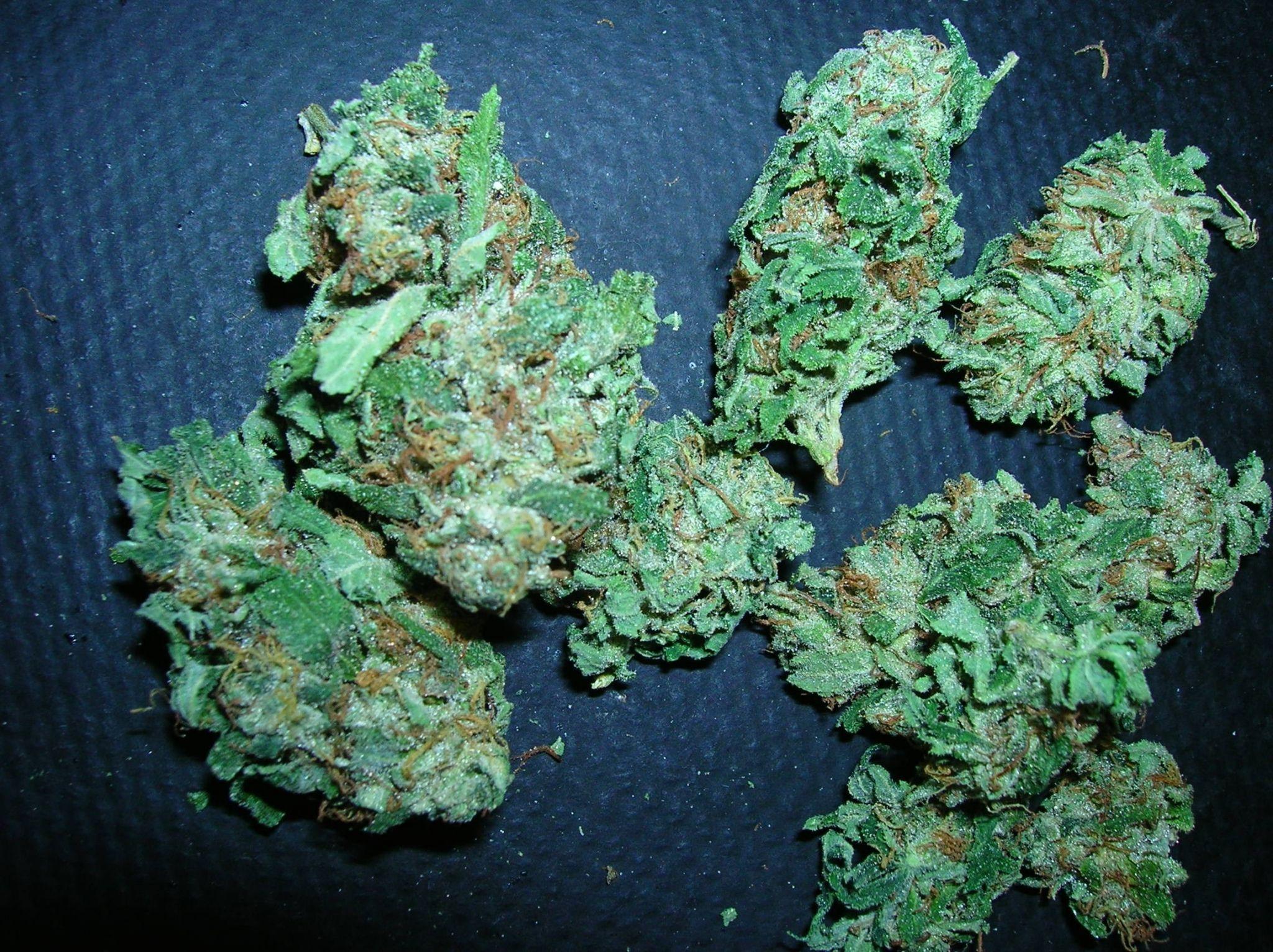


What Is ‘Kush’ Cannabis?

Kush is a strain of Cannabis indica. The origins of Kush Cannabis are from landrace plants mainly in Afghanistan, Northern Pakistan and North-Western India with the name coming from the Hindu Kush mountain range. “Hindu Kush” strains of Cannabis.

Hindu Kush—historically grown only in the mountain range of the same name, which mostly runs along the border between Afghanistan and Pakistan—is one of the most potent landrace strains available. The Himalayan slopes gave birth to the strain, which over time, brought about many other strains that inherited part of its name—Kush.      How can cannabis help with weight loss?     Top 3: Popular cannabis strains and what they can do for you     Supreme Cannabis and Khalifa Kush Enterprises announce international partnership  What does the slang Kush mean?  In the last decade or so, the word “Kush” has become synonymous with premium cannabis strains; high-quality street cannabis is often called Kush among users. Kush became the go-to term for high-quality cannabis in the U.S., quickly replacing its contemporaries. What is Kush?  Kush is primarily a cannabis indica strain, which has risen in popularity in the last decade, and played a pivotal role in creating dozens of modern-day hybrid strains. One will rarely see a Kush strain that is a purebred sativa, although this can occur with proper growing conditions, combined with relentless cross-breeding.  Macro view of the Black Lotus Kush bud. iStock / Getty Images Plus  When Kush is grown under specific conditions, its unique phenotypes come out in a different light. Kush plants are known to evolve and acclimate in order to survive. Nowadays, Kush is grown all around the world, but its tough Himalayan genetics endured and continue to follow the strain, giving it both durability and potency.  It is most likely true that Kush is a lost strain and that its precise genetics are unknown. That said, the next best thing is available, namely OG Kush, also known as Ocean Grown Kush. The rise of OG Kush  OG Kush first appeared in California during the 1990s, right around the time Dr. Dre dropped his The Chronic album, which took the cannabis community by storm.  There are two stories that explain the strain’s mysterious genetics. The first is that a breeder claimed to have gotten the seed from a bag of Chemdawg 91 strain, in the Lake Tahoe area in 1996; the second goes that it was brought to California from Florida, by a grower who now operates a company known as Imperial Genetics. He reports the parents of this strain were a male cross of Lemon Thai and Old World Paki Kush, and a female Chemdawg plant.      Unfortunately, OG Kush is a clone-only strain and, at that time, one couldn’t simply plant a seed of this strain. Rather, a cutting from an existing plant is needed.  There is a lot of confusion about the origin of the name, and what OG exactly stands for. Given that it was bred in California, many users thought it meant Original Gangster, or just Original Kush. However, the truth is the grower who first bred OG Kush in California was asked by a consumer if it was mountain-grown, complimenting the quality of his buds. The grower responded with a simple, “This Kush is ocean-grown, bro.” The rest is history.  Quickly after that, cuttings of various OG Kush plants began making the rounds around Los Angeles and the rest of California. Those cuttings made way for new, closely-related strains.  Hindu Kush—historically grown only in the mountain range of the same name, which mostly runs along the border between Afghanistan and Pakistan—is one of the most potent landrace strains available. iStock / Getty Images Plus  The strains that came from these plants all gained popularity, and developed into Cannabis Cup winners themselves, including Bubba Kush, West Coast Dog, Larry OG, Tahoe OG Kush, Triple OG, Ghost OG, Diablo OG and so forth. What does the Kush high feel like?  Kush strains are known to have the utmost relaxing effect, all while making the user giggly and joyous. These traits aren’t common among the different cannabis strains that came from Kush.  Kush strains with strong ties to their indica roots are very hard to come by these days, as the cannabis community moved towards growing highly resistant hybrids. However, those who still grow Kush with a higher indica presence are known to produce flowers with potent cerebral effects that “tranquilize” the user, and these buds are frequently recommended as a way to battle insomnia. Popular Kush strains  There are 100-plus strains containing the word Kush in their names, and many more that came about by cross-breeding Kush strains with other strains. As previously mentioned, landrace Hindu Kush is known for its resilience and the ability to grow just about anywhere, a useful trait that made Hindu Kush one of the most sought-after strains by growers and breeders.  As it now stands, there are overwhelmingly more hybrid and indica Kush strains than sativa Kush strains. Additionally, most of the Kush strains aren’t pure indicas and sativas, but rather hybrids whose one trait is more dominant than the other.  With that in mind, here are picks of some of the best Kush strains by three separate categories. The most popular indica-dominant Kush strains include Kosher Kush, Bubba Kush, Critical Kush, Afghan Kush, Platinum Kush, Hindu Kush, Super Kush, Sin City Kush, Alien Kush, Purple Kush, Purple OG Kush and Master Kush; the most popular hybrid Kush strains include OG Kush, Pink Kush, Lemon OG Kush, Cali Kush, Royal Kush, Mango Kush, Pineapple Kush, Holy Grail Kush and Big Kush; and the most popular sativa-dominant Kush strains include Mickey Kush, Silver Kush, Quantum Kush and Heisenberg Kush. What is the best Kush strain?  OG Kush is widely viewed as the best Kush strain because of its legacy. That said, it’s somewhat difficult to classify one strain as the absolute best, mostly because each crop varies in quality and cannabinoid and terpene levels. There are also many variations of a more or less same strain.  Given that OG Kush was originally a clone-only strain, growers named clones of different potency different names. This has produced confusion since, at one point, a person might have smoked the exact same weed from two different growers marketed under two different names.  If the best strain is characterized as “the one with the highest level of THC,” then the Oscar goes to Ghost OG. This strain is, without a doubt, the strongest Kush variety, at least so indicates Washington State I-502 data.  In that testing sample, Ghost OG, which is a cutting from the original OG Kush mother stock, consistently came in at a colossal 28.7 percent THC content. On the same test, OG Kush results came in significantly lower, averaging around 19.4 percent THC content.  In a study conducted by scientists Nick Jikomes and Michael Zoorob, they found OG Kush isn’t topping its competitors, at least as far as THC levels go. In their study, Gorilla Glue #4—now usually known as Original Glue—came in first place with an average of 21 percent THC. The researchers concluded that there’s still a lot of test result manipulation going on and that retailers often display cannabinoid levels much higher than they actually are.  With that in mind, THC levels should not determine which Kush strain is “best”, because the
Kush

In other words :-
Cannabis can be classified in many different ways. Typically, this resinous flower is categorized as sativa, hybrid, or indica, based on the morphology of the plant. But cannabis can be further categorized through a vernacular defined by the popular culture, such as Kush, Haze, and Purple. These terms refer to types of cannabis characterized by distinct smells, flavors, effects, and/or geographic regions.

Did You Know* 
You may have heard Kush being mentioned in many popular hip-hop songs. Time for an education on everything there is to know about the strain.
Hindu Kush—historically grown only in the mountain range of the same name, which mostly runs along the border between Afghanistan and Pakistan—is one of the most potent landrace strains available. The Himalayan slopes gave birth to the strain, which over time, brought about many other strains that inherited part of its name—Kush.


What is the best Kush strain?

OG Kush is widely viewed as the best Kush strain because of its legacy. That said, it’s somewhat difficult to classify one strain as the absolute best, mostly because each crop varies in quality and cannabinoid and terpene levels. There are also many variations of a more or less same strain.
Given that OG Kush was originally a clone-only strain, growers named clones of different potency different names. This has produced confusion since, at one point, a person might have smoked the exact same weed from two different growers marketed under two different names.
If the best strain is characterized as “the one with the highest level of THC,” then the Oscar goes to Ghost OG. This strain is, without a doubt, the strongest Kush variety, at least so indicates Washington State I-502 data.
In that testing sample, Ghost OG, which is a cutting from the original OG Kush mother stock, consistently came in at a colossal 28.7 percent THC content. On the same test, OG Kush results came in significantly lower, averaging around 19.4 percent THC content.
In a study conducted by scientists Nick Jikomes and Michael Zoorob, they found OG Kush isn’t topping its competitors, at least as far as THC levels go. In their study, Gorilla Glue #4—now usually known as Original Glue—came in first place with an average of 21 percent THC. The researchers concluded that there’s still a lot of test result manipulation going on and that retailers often display cannabinoid levels much higher than they actually are.
With that in mind, THC levels should not determine which Kush strain is “best”, because the delicate balance of minor cannabinoids and terpenes also plays an important role in the effects of each particular strain. There is much more to a strain than just numbers on a piece of paper.

The Most Popular Kush Cannabis Strains?

A simple search of “Kush” will yield hundreds of strains with an Afghani ancestor, but let’s start with the five most popular: 
1. OG Kush  
                                                                                 

The most famous of all Kush varieties, OG Kush hits the sweet spot on the indica-dominant hybrid scale. This strain’s comfortable yet potent sedation coupled with an uplifting euphoria make it the perfect strain to just feel good with.

2. Bubba Kush

Leafly Bubba Kush indica cannabis strain tile and effects
Bubba Kush is what usually comes to mind when people think of indica-dominant effects. This strain is stoney and sedative, weighing the consumer to couch as though they were wearing cement boots with a matching cement tracksuit and stately cement trench coat. Bubba Kush may also ignite your appetite; just try not to fall asleep in front of the fridge while spooning a box of Eggo waffles.

3. Purple Kush

Leafly Purple Kush indica cannabis strain tile and effects
Purple Kush is an excellent example of indica-dominant attributes. This strain has purple foliage and will generally have an earthy, grapey flavor, as well as sleepy effects.

4. Skywalker OG

Leafly Skywalker OG hybrid cannabis strain tile and effects
Skywalker OG takes the classic hybrid effects of OG Kush and deepens its sedating effects with the addition of Skywalker. This Kush develops a fruit-rich, diesel-driven flavor and aroma while mimicking the happy, uplifted mental characteristics of its paternal genetics. The creeping, sedative effects melt over the body, taking the consumer from the light side of day into the dark side of night (and sleep.)

5. Master Kush

Leafly Master Kush indica cannabis strain tile and effects
Master Kush is another Kush classic that inherits attributes directly from Hindu Kush. With a mixture of sleepy, happy, and relaxing effects, Master Kush earns its title. This strain is an excellent alternative to Bubba Kush.

source info 
 
Which Kush varieties are your favorite? Share them in the comments section below!

Design a site like this with WordPress.com
Get started